The Institute of Cetacean Research

- You are here:
- Home>
- English Sitemap>
- RESEARCH>
- Ongoing Research>
- JASS-A



JASS-A (Japanese Abundance and Stock-structure Surveys in the Antarctic) outline
National dedicated sighting surveys (JASS-A)
Japan officially withdrew from the International Whaling Commission (IWC) on 30 June 2019. As an effect of this decision, the special permit whale research programs (SPWRP) ‘New Scientific Whale Research Program in the Antarctic’ (NEWREP-A) was halted by the Government of Japan (GOJ). After the withdrawn from the IWC, Japan, through the Institute of Cetacean Research (ICR) considered important to continue whale and ecosystem surveys in the Indo-Pacific region of the Antarctic through dedicated sighting surveys and other non-lethal techniques to investigate primarily abundance, abundance trends and stock structure of large whales. For such an aim a new research program was designed which is called JASS-A (Japanese Abundance and Stock-structure Surveys in the Antarctic).
The JASS-A program was presented to the 2019 meeting of the IWC Scientific Committee (SC), to the 2019 meeting of the Commission for the Conservation of Antarctic Marine Living Resources-Working Group on Ecosystem Monitoring and Management (CCAMLR-EMM), and to the meeting of the North Atlantic Marine Mammal Commission Scientific Committee (NAMMCO SC). JASS-A was positively evaluated at these international forums.
The main research objectives (MO) of JASS-A are:
MO1: Study of the abundance and abundance trends of large whale species in the Indo-Pacific region of the Antarctic
Abundance and abundance trends of whales in the Antarctic are essential for conservation and management purposes. Many whale species were depleted in the past. Some of them have shown signs of recovery in recent years, and it is important to monitor their recovery process and how such recovery could affect other whale species in the ecosystem.
MO2: Study of the distribution, movement and stock structure of large whale species in the Indo-Pacific region of the Antarctic
Stock structure information is important to interpret distribution and abundance estimates. Genetic stocks are demographically independent units and therefore each stock will respond in a different way to changes that have occurred in the ecosystem. Ideally abundance estimates should be based on the geographical and temporal boundaries of genetic stocks.
The secondary objectives (SO) of JASS-A are:
SO1: Investigation of the oceanographic conditions in the Indo-Pacific region of the Antarctic
Oceanographic structure and dynamics provide important information in interpreting changes in the Antarctic ecosystem. Changes in oceanographic conditions will affect krill distribution and biomass and, in turn, the abundance and distribution of whales. Changes in oceanographic conditions can be related to climate changes.
SO2: Investigation of the spatial and temporal trends of marine debris on sea surface
Studies on marine debris in the Antarctic are very scarce with only a few records made in sub-Antarctic, Antarctic islands and the Antarctic. It is important to continue with this kind of survey to monitor the future trends in the occurrence of marine debris.
SO3: To conduct feasibility studies to evaluate the utility of genetic data to estimate abundance
Systematic sighting surveys utilizing the Line Transect Method is the most used method to estimate abundance of whales. Basic line transects surveys, however, are not always appropriate, especially for rare species/populations. Also, in the case of the Antarctic it is not possible to utilize line transect methodology for areas inside the pack-ice, e.g., polynyas, where whales are also distributed. Genetic-based methods can assist in the abundance estimates in such cases.
SO4: To continue with feasibility studies to evaluate the utility of non-lethal techniques for whale biological research
During NEWREP-A several studies were carried out to investigate the feasibility of novel non-lethal approaches to address some of the main objectives of the NEWREP-A on Antarctic minke whales, e.g., progesterone analysis in blubber to investigate reproductive status in females, and stable isotopes to investigate whales’ prey items. There is a need to continue with the investigation into the utility of such techniques for large whales.
SO5: Feasibility study on the utility of Unmanned Aerial Vehicle (UAV) for obtaining information relevant for abundance estimate of large whales
The research area of JASS-A is comprised of IWC Management Areas III, IV, V and VI, south of 60°S (Figure 1). This will allow for continuity and consistency with data already collected by the former special permit whale research programs in the Antarctic (JARPA/JARPAII, NEWREP-A) and IDCR/SOWER surveys in those Management Areas.
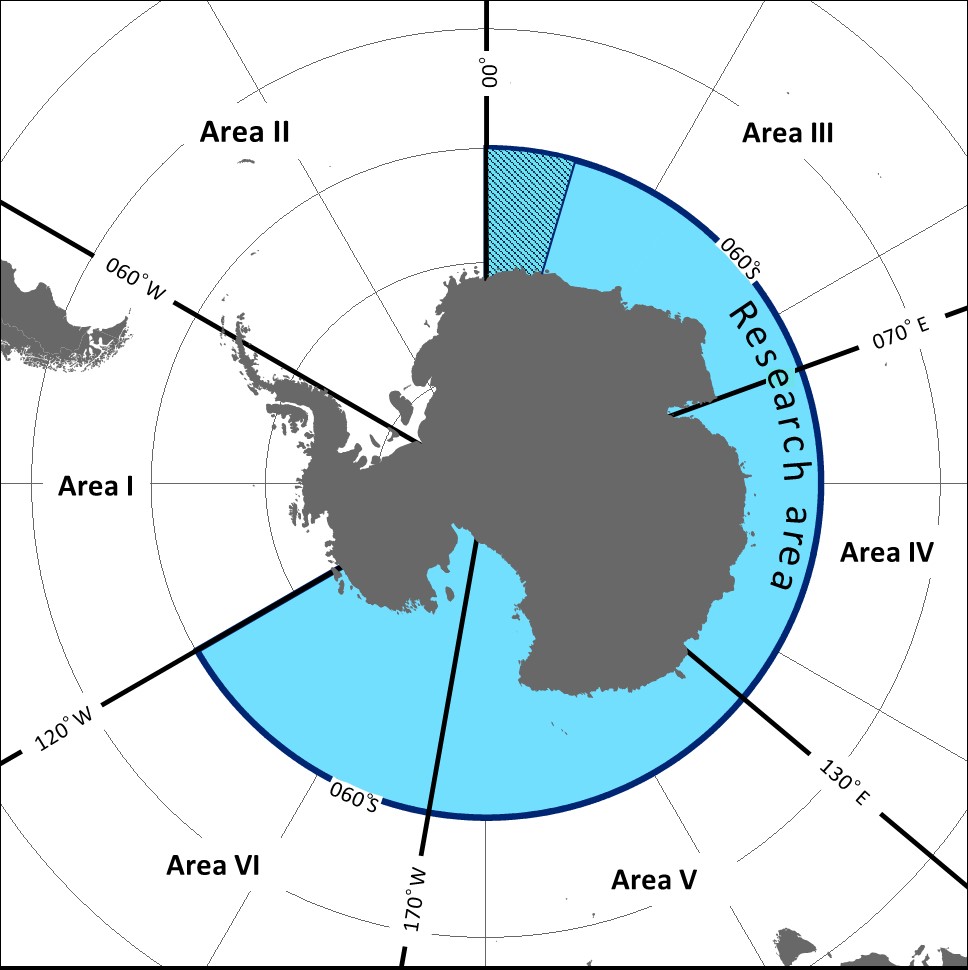
Figure 1. Research area of the JASS-A program.
The period of the annual surveys is the austral summer season (January-February), which is the same as in the previous research programs indicated above.
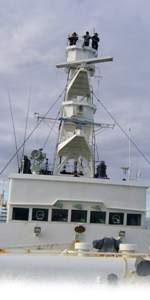
Surveys are carried out by one or two specialized vessels (Figure 2), and the tentative length for JASS-A will be eight years (2019/20-2026/27), a period required to cover half of each Area once. The final determination of the period and number of vessels will depend on funding availability.
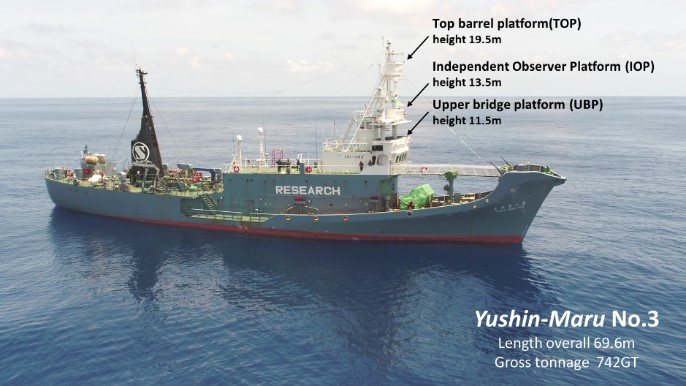
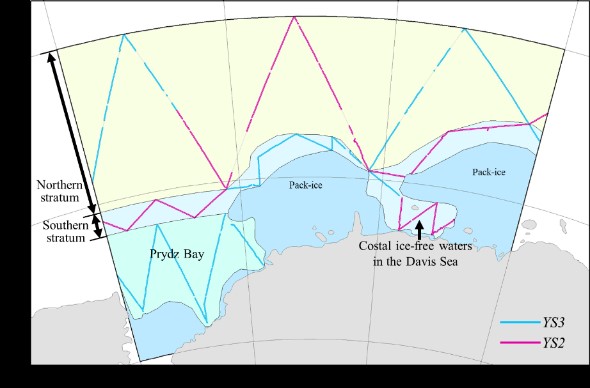
Figure 2. Example of specialized research vessels participating in JASS-A(top), and example of tracklines in the Antarctic(bottom).
Reserch activities
Singhtings
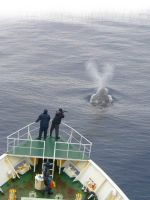
The main research activity is related to systematic vessel-based sighting surveys utilizing the Line Transect Method for the main objective of abundance estimates of several large whale species (Figure 3). Surveys and analytical procedures are designed and conducted following the protocols and guidelines of the IWC SC and are similar to the sighting protocols used in the former IWC IDCR/SOWER surveys in the Antarctic, and IWC-POWER surveys and Japanese dedicated sighting surveys in the North Pacific.
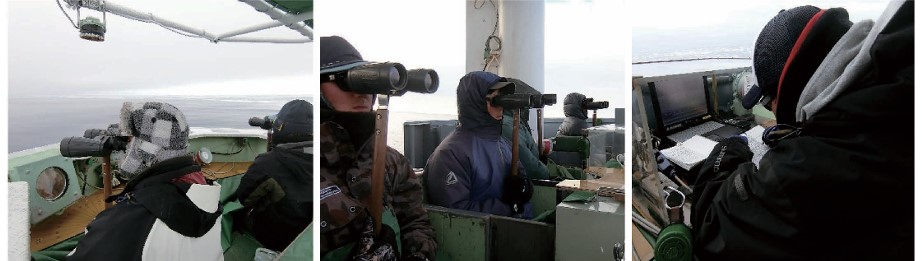
Figure 3. ICR scientists carrying out sighting surveys under the JASS-A program.
Stock structure
Studies on stock structure in humpback, blue, southern right and fin whales are based on genetic analyses of previous biopsy samples as well as additional biopsy samples collected by JASS-A (Figure 4). Refinement of the stock structure hypothesis of the Antarctic minke whales continues under the JASS-A based on the large genetic sample set collected under JARPA/JARPAII and NEWREP-A.
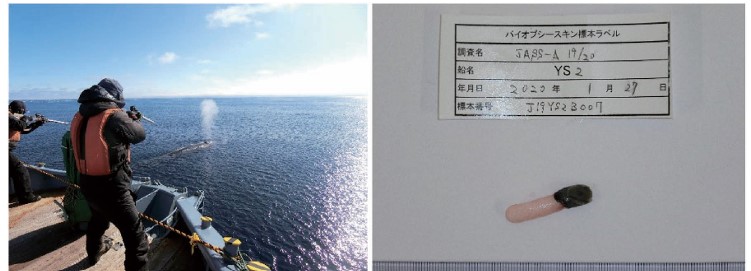
Figure 4. Biopsy sampling of blue whale (left) and skin/blubber samples of blue whale obtained by biopsy sampling (right) under the JASS-A program.
Distribution and movement
Distribution and movement of individual humpback, blue, southern right and fin whales are investigated primarily by photo-id (Figure 5) and satellite tagging (Figure 6). Photo-id pictures in conjunction with pictures obtained in previous programs are used for the matching exercise to investigate distribution and movement of those large whales.
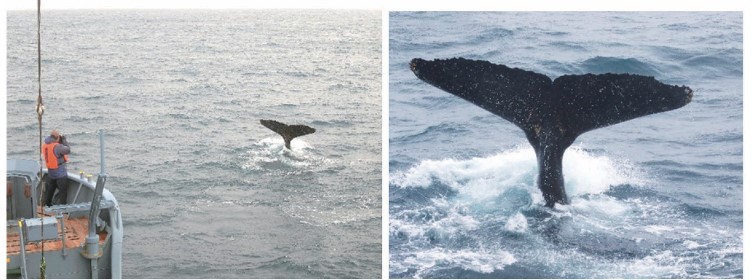
Figure 5. Photo-id experiments on humpback whales from the bow deck of the vessel (left); details of fluke pigmentation of a humpback whale (right) under the JASS-A program.
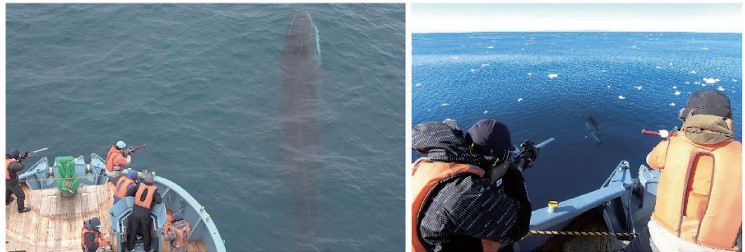
Figure 6. Satellite tagging and biopsy sampling of fin (left) and Antarctic minke (right) whales conducted under the JASS-A program.
Oceanographic
In each JASS-A survey, oceanographic surveys are conducted at one station per day, at least, using eXpendable Conductivity, Temperature and Depth (XCTD) (Figure 7). Oceanographic stations are deployed at equal intervals along the track-lines defined for the sighting surveys. The aim here is to investigate how the distribution of large whales is related to oceanographic conditions in the research area.
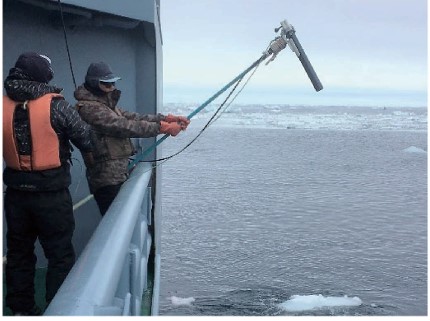
Figure 7. Oceanographic surveys by XCTD conducted under the JASS-A program.
Marine debris
The vessels platform is also used for observation of marine debris on the sea surface by visual observation along the track-lines of sighting surveys, the same as was done in JARPA/JARPAII and NEWREP-A (Figure 8).
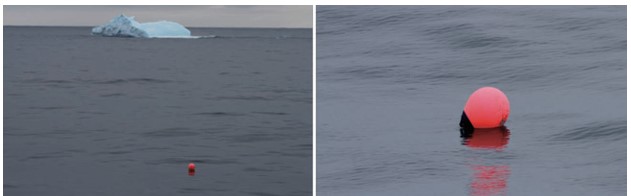
Figure 8. Observation of marine macro debris during a JASS-A survey.
Others
Approaches based on mark-recapture of genetically identified individuals are used to estimate abundance based on genetic data. Individual identification is based on the genotype profile of a set of microsatellite loci. Studies have already started for southern right whales based on biopsy sampling. Other potential target species are the blue and humpback whales as a considerable number of biopsy samples are already available.
Antarctic minke whales are also a target species for paternity analyses based on the substantial amount of genetic and other biological data from JARPA/JARPAII and NEWREP-A. In this case mark-recapture analyses are used to estimate the abundance estimates of males.
Biopsy samples obtained along the JASS-A surveys are also used for progressing the research of non-genetic techniques to investigate important biological and ecological aspects of whales. For example, prey items of large baleen whales are investigated based on previous samples collected lethally, and biopsy samples (old and new samples) and stable isotope analyses. Priority species for this study are the Antarctic minke, fin and southern right whales.
Several types of UAV are tested to investigate the utility of this technique for obtaining information relevant for abundance estimates of large whales including the number of whales in a school (Figure 9).
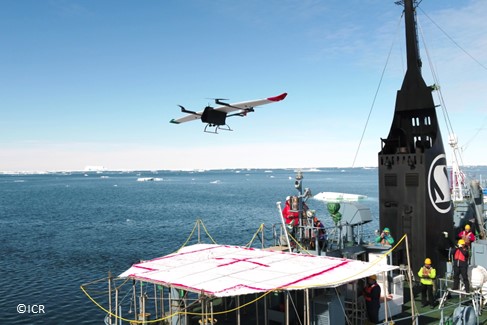
Figure 9. Drone survey by Asuka under JASS-A.
Analyses in JASS-A are conducted in conjunction with the large data sets produced by JARPA/JARPAII and NEWREP-A in the Indo-Pacific region of the Antarctic. An international workshop to review the mid-term results of JASS-A is planned for October 2025, and a final review is planned after the end of the program.(after 2026/2027)
Scientists from the ICR play the leading role in order to pursue research activities and achieve the research objectives of JASS-A, in collaboration with scientists from other domestic research organizations such as the Fisheries Research Institute, and the Tokyo University of Marine Science and Technology. A domestic Steering Group was formed to coordinate the research activities.
Scientists participating in field surveys of JASS-A come mainly from the ICR and other Japanese research institutions. Qualified foreign scientists are welcome to participate in the field and analytical works of JASS-A. Qualified external scientists can submit field or analytical research proposals for consideration of the domestic steering group. Following this process, a Chilean scientist participated in the 2023/24 JASS-A survey.