The Institute of Cetacean Research




Hydrogen-Powered VTOL-UAV F.T.B. ASUKA Mark V H2 receives Special Approval from the Minister of Economy, Trade and Industry
June 5, 2026
Designated Corporation for Scientific Whale Research
THE INSTITUTE OF CETACEAN RESEARCH
The Institute of Cetacean Research (Chuo-ku, Tokyo; Dr. Yoshihiro Fujise, Director General) has obtained a special approval from Japan’s Minister of Economy, Trade and Industry (METI) for its hydrogen-powered VTOL-UAV, F.T.B. ASUKA Mark V H2 (“ASUKA H2”), which is currently being developed for cetacean aerial survey operations. The approval authorizes the aircraft to be equipped with high-pressure hydrogen gas cylinders.
The approval, granted under Japan’s High Pressure Gas Safety Act, is required for the operation of an unmanned aerial vehicle equipped with high-pressure hydrogen gas cylinders and was issued following a comprehensive safety assessment.
The ASUKA H2 is an experimental aircraft equipped with a hydrogen fuel power supply system. It is being developed based on the Institute’s ASUKA series of VTOL-UAVs for cetacean aerial surveys, with the objectives of extending flight range, increasing payload capacity, achieving zero direct CO₂ emissions during flight, and reducing the environmental impact of survey operations.
The high-pressure hydrogen gas cylinders installed on the aircraft are hydrogen storage containers developed by JFE Container Co., Ltd. The company provided technical support regarding the hydrogen cylinders as well as assistance with the procedures required to obtain the approval. The Institute will continue to pursue technological innovations that contribute to the advancement of cetacean resource surveys and related research activities.
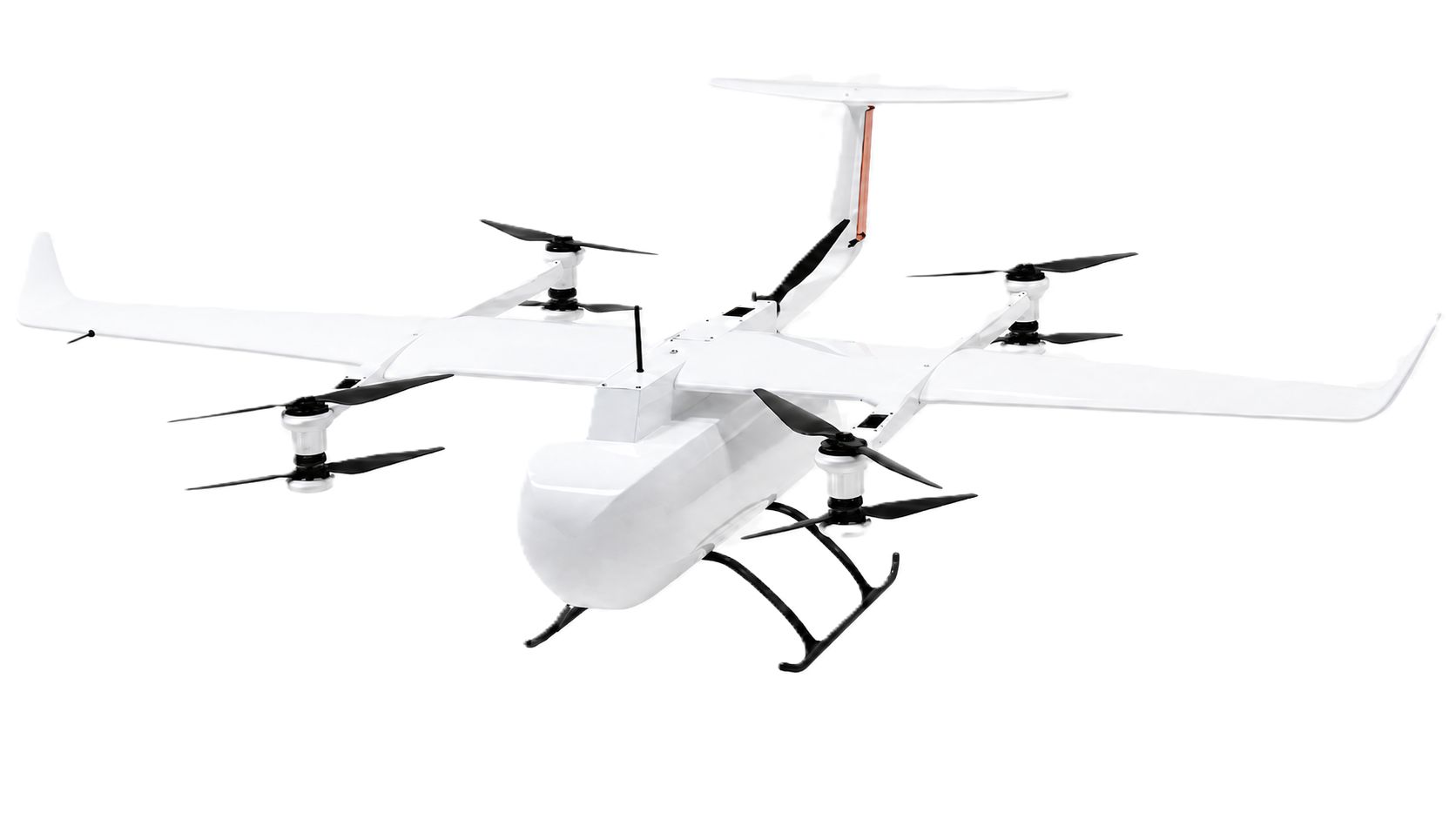
Figure 1. Conceptual rendering of the hydrogen-powered VTOL-UAV F.T.B. ASUKA Mark V H2.
Image based on photographs of the actual aircraft.
Glossary of Terms
Special Approval by the Minister of Economy, Trade and Industry (METI): A regulatory approval granted by the Minister of Economy, Trade and Industry under Japan’s High Pressure Gas Safety Act. It allows high-pressure gas cylinders and related equipment to be used in applications or configurations that differ from standard regulatory requirements, subject to safety assessments and technical evaluations. The installation and operation of high-pressure hydrogen gas cylinders on UAVs require confirmation, evaluation, and approval in accordance with applicable laws and regulations.
VTOL-UAV (Vertical Take-Off and Landing Unmanned Aerial Vehicle): VTOL stands for Vertical Take-Off and Landing. A VTOL-UAV is an unmanned aircraft capable of taking off and landing vertically without the need for a runway, while also using fixed-wing flights for efficient long-range operations.
For more information contact:
Dr. Koji Matsuoka, Director,
The Institute of Cetacean Research
Contact e-mail: webmaster@icrwhale.org
END
Hydrogen-Powered VTOL-UAV F.T.B. ASUKA Mark V H2 receives Special Approval from the Minister of Economy, Trade and Industry (PDF file)