The Institute of Cetacean Research



Completion of Japanese Abundance and Stock-structure Surveys in the Antarctic (JASS-A) 2025/26 Research Cruise
March 6, 2026
Designated Corporation for Scientific Whale Research
THE INSTITUTE OF CETACEAN RESEARCH
1. Background
This research program is a continuation of the Japanese government's research program (non-lethal research) aimed at the sustainable use of whale resources in the Antarctic Ocean, and this survey is the seventh research cruise in the Antarctic after Japan's withdrawal from the International Whaling Commission (IWC) on June 30, 2019. This year's research in the Antarctic included a sighting survey, biopsy sampling, satellite tagging, oceanographic observation, and collection of other relevant information on cetaceans.
The scientific information obtained from this research will be provided to relevant international organizations such as the IWC Scientific Committee, the Ecosystem Monitoring and Management Working Group of the Commission for the Conservation of Atlantic Marine Living Resources (CCAMLR) and the Scientific Committee of the North Atlantic Marine Mammal Commission (NAMMCO) to contribute to the appropriate management of whale resources in the Antarctic Ocean.
The research vessels Yushin-Maru No. 3 and Yushin-Maru No. 2 departed from Shiogama, Miyagi Prefecture on December 3, 2025, and after conducting sighting surveys and various experiments and observations in the Antarctic ocean for 34 days (from January 5 to February 7) in the south of 60 degrees south latitude, both vessels returned to port on March 12, 2026.
2. Overview
• This survey is financially supported by the Fisheries Agency, and the Institute of Cetacean Research takes the lead in planning, implementing, and conducting analyses of the data obtained from it.
• This year, surveys were conducted in the waters south of 60 degrees latitude, between 130- and 170-degrees East longitude (covering the western waters of IWC management Area V and part of its eastern waters) (Fig. 1).
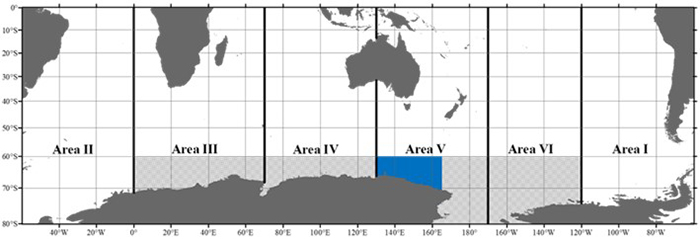
Figure 1. The entire JASS-A surveys area is shown in gray. The research area for 2025/26 is shown in blue.
• As in the previous year, one scientist from the Chilean research institute CEQUA1 participated in the survey.
• We collected sighting data necessary for whale stock assessments consistent with past surveys. Furthermore, we successfully gathered various non-lethal survey data, including the collection of multiple biopsy samples and the attachment of satellite tags.
• The most frequently observed species was the humpback whale, which was distributed in high density primarily in the southern part of the survey area. The second most frequently observed species, the fin whale, was also distributed in large numbers primarily in the southern part of the survey area (Fig. 2).
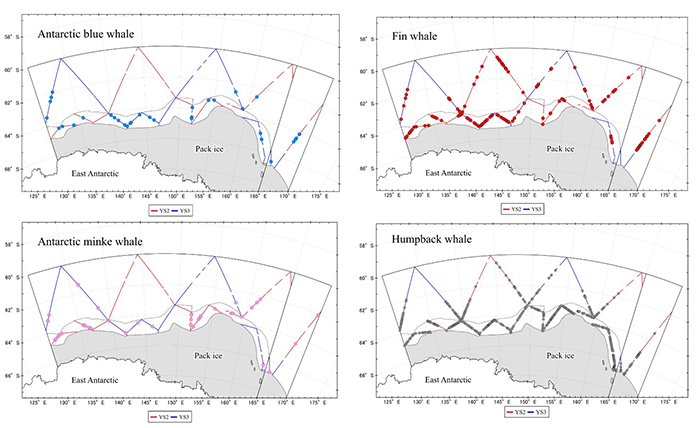
Figure 2. Sighting locations of the four major baleen whale species.
• In this sea area as well, a significant recovery in the populations of humpback and fin whales and an expansion of their distribution ranges have been confirmed.
• The sparse number of Antarctic minke whale sightings, including in their primary distribution area near the sea edge, is thought to be strongly associated with the recovery and expanded distribution of humpback and fin whales, which compete with them for the same prey, Antarctic krill. Consequently, Antarctic minke whales are believed to have shifted their primary distribution to waters formed deep within the ice edge (polynyas), inaccessible to those other whales and research vessels (Fig. 3).
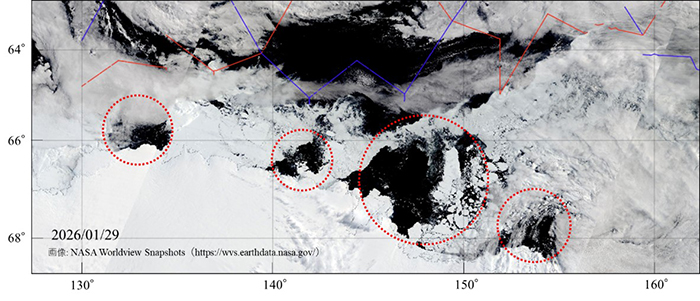
Figure 3. Open water areas (polynyas) formed south of the ice edge. in the research area (red circles).
• The blue whale was the most frequently observed species in past surveys of this area, confirming signs of population recovery.
• Through our long-year ongoing research, we have identified a phenomenon whereby the Antarctic Ocean ecosystem, particularly the cetacean population, is undergoing significant changes.
1 Center for the Studies of the Quaternary of Fuego Patagonia and Chilean Antarctic (CEQUA), Punta Arenas, Chile.
2.1 Main Research Objectives
The main research objectives of JASS-A are:
(1) Study of abundance and their trends of large whale species in the Antarctic Ocean.
(2) Study of the distribution, movement, and stock structure of large whale species in the Antarctic Ocean.
2.2 Research Cruise and Survey Period
Yushin-Maru No. 3 and Yushin-Maru No. 2 undertook a 100-day research cruise, departing from and returning to Shiogama Port on 3 December 2025 and 12 March 2026, respectively.
The survey took place over 34 days in the survey area, from 5 January to 7 February 2026.
2.3 Research Area
The survey area comprised the western waters and part of the eastern waters of Area V, one of the IWC management areas in the Antarctic Ocean. This area extended from 130 degrees East to 170 degrees East south of 60 degrees south latitude (Fig. 1). In addition, we conducted mid- and low-latitudinal sighting surveys in the waters excluding the two hundred nautical mile zones of foreign countries during the round-trip voyage from Japan to the survey area.
2.4 Researchers
Yushin-Maru No. 3
Tatsuya Isoda (Cruise Leader: Deputy Director, Research Department 1, The Institute of Cetacean Research) and 3* other researchers.
* Including one scientist from the Chilean research institute CEQUA.
Yushin-Maru No. 2
Minato Kawasaki (Research Scientist, Research Center, The Institute of Cetacean Research) and 2 other researchers.
2.5 Research Vessels
Yushin-Maru No. 3, (742 tons, Kyodo Senpaku, Ltd., Captain Shigeru Nojima, 16 crews in total).
Yushin-Maru No. 2, (747 tons, Kyodo Senpaku, Ltd., Captain Chikamasa Okoshi, 16 crews in total).
A total of 39 personnel were onboard both vessels and engaged in the research cruise.
2.6 Implementing Body
Designated Corporation for Scientific Whale Research - The Institute of Cetacean Research.
2.7 Total Search Distance
The total search distance was 3,156.0 nautical miles (5,844.9 km).
2.8 Main Whale Sightings
Blue whale: 40 schools; 48 animals
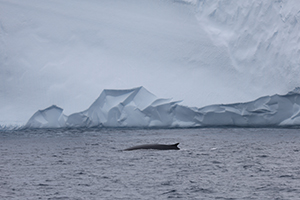
Fin whale: 184 schools; 456 animals
Antarctic minke whale: 63 schools; 97 animals
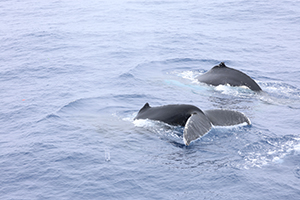
Humpback whale: 661 schools; 1,234 animals
Sei whale:8 schools; 25 animals
Sperm whale:3 schools; 3 animals
Southern bottlenose whale: 2 schools; 6 animals
Killer whale:7 schools; 57 animals
2.9 Results from Various Experiments and Observations
(1) Distance-angle estimation experiment
A distance-angle estimation experiment was conducted to determine the accuracy of the estimation of the angle and distance of detection by each visual observer.
(2) Individual identification photo shooting (number of individuals)
Blue whale (35 animals), humpback whale (62 animals), killer whale (14 animals).
(3) Biopsy sample collection (number of individuals)
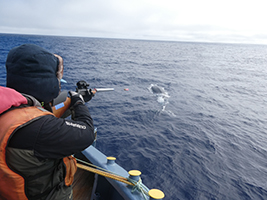
Blue whale (18 animals), fin whale (25 animals), Antarctic minke whale (12 animals), humpback whale (29 animals), killer whale (3 animals).
(4) Satellite tag attachment experiment
Satellite tags were attached to 14 fin whales and 10 Antarctic minke whales to record their migration and diving behavior, and swimming information was collected.
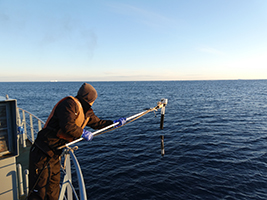
(5) Oceanographic observation by XCTD (Expendable Conductivity-Temperature-Depth probe)
Water temperature and salinity were measured at 158 stations from 0 to 1,850 m depth for the purpose of comparing oceanographic structure and cetacean distribution in the research area.
(6) Survey utilizing drones
We successfully filmed one individual blue whale.
(7) Observation of marine debris
This year, one marine drifting object (a drum can) was observed in the research area.
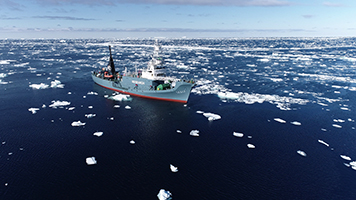
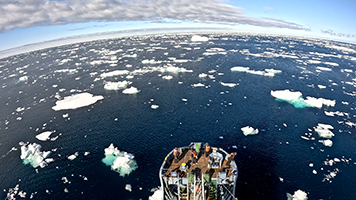
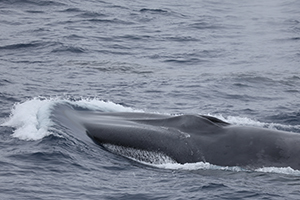
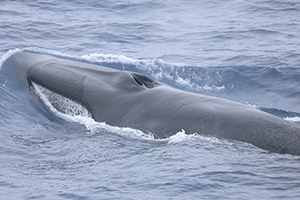
2025/26 JASS-A Research Cruise photographs.
 |
 |
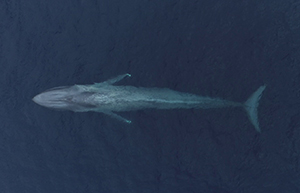 |
| Yushin-Maru No. 3 | Yushin-Maru No. 3 navigating sea ice areas | Blue whale (drone aerial photography) |
 |
 |
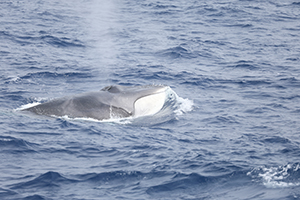 |
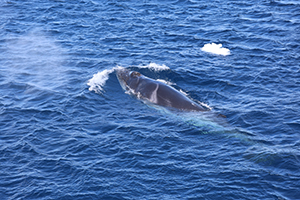
| Blue whale | Fin whale | Fin whale (shows unique white right lower jaw) |
 |
 |
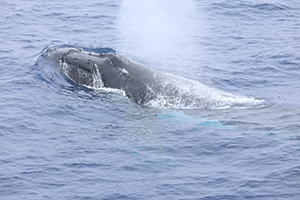 |
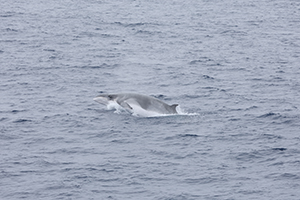
| Antarctic minke whale | Antarctic minke whale breaching | Humpback whale |
 |
 |
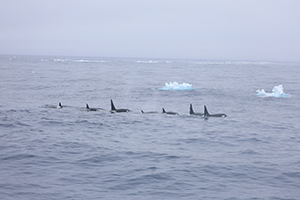 |
| Humpback whales diving | Iceberg and fin whale | Killer whale school |
 |
 |
|
| Biopsy sampling | Oceanographic observations by XCTD |
Videos of past surveys are available at the Institute's YouTube channel.(https://www.youtube.com/channel/UCz3c9IIMiQPVeryAogmJIig).
Completion of Japanese Abundance and Stock-structure Surveys in the Antarctic (JASS-A) 2025/26 Research Cruise (PDF file)